 Nightlore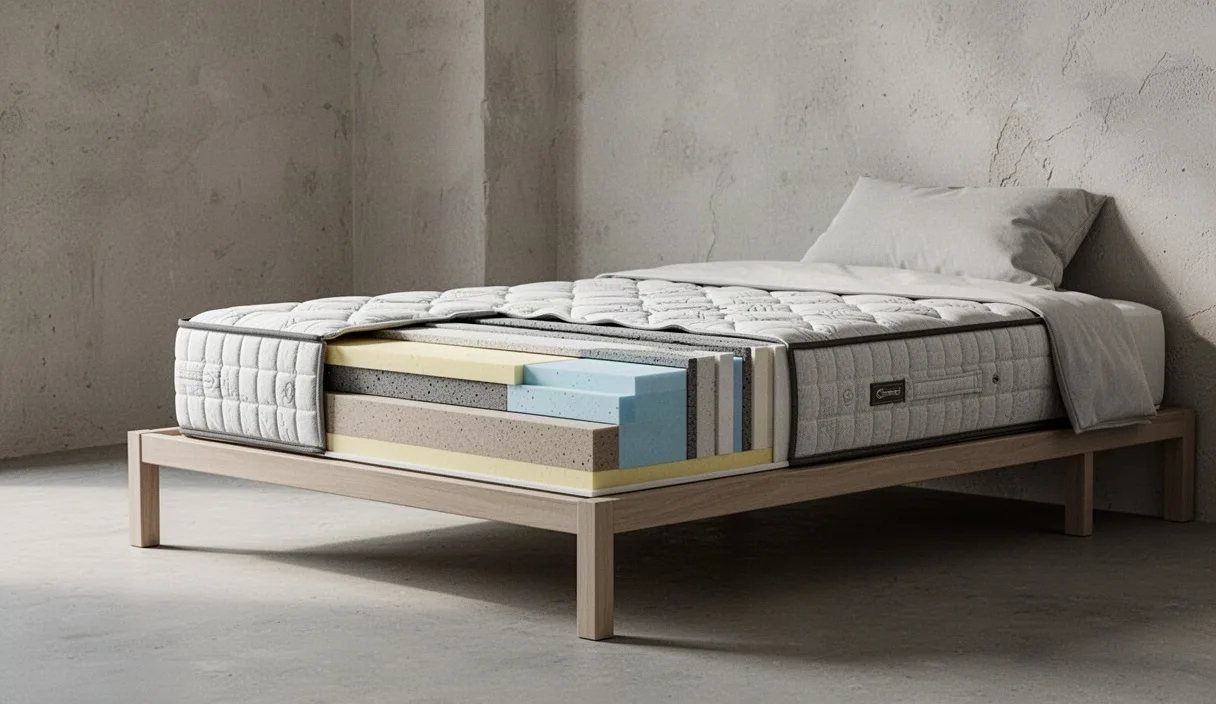

Mattress shopping tends to collapse, almost immediately, into a single question: firm or soft? It is the wrong question, or at least an incomplete one, because firmness only matters in relation to how a body actually rests on a surface for seven or eight hours a night. A mattress that reads as pleasantly supportive to one shopper can leave another with a stiff lower back by morning, and the difference is rarely about quality. It is about geometry: where the hips, shoulders and spine sit relative to the sleeping surface, which is determined largely by sleep position.
This guide works through the mechanics of firmness rather than the marketing language attached to it. It looks at what the standard firmness scales measure, how side, back, stomach and combination sleepers tend to fare on different surfaces, and what questions are worth asking before signing off on a purchase that will likely stay in the bedroom for eight to ten years. None of this replaces a conversation with a physiotherapist or physician for anyone dealing with ongoing back, hip or neck pain, but it should make the showroom or the checkout page considerably less confusing.
Why sleep position changes firmness needs
The spine, viewed from the side, has a natural S-curve. A supportive mattress is one that keeps that curve roughly intact when a person lies down, rather than flattening it or exaggerating it. Because the body's widest points, shoulders and hips, differ depending on whether someone lies on their side, back or front, the surface needs to behave differently in each case to achieve the same result: a level spine.
Side sleeping puts the shoulder and hip under concentrated pressure, since these are the two points making the most contact with the mattress while the waist floats above it. A surface that is too firm will not allow the shoulder and hip to sink in enough, which tilts the spine and can pinch the shoulder nerve or compress the hip joint over time. Back sleeping distributes weight more evenly across the shoulder blades, lower back and hips, so the priority shifts to preventing the lumbar region from sagging into a gap. Stomach sleeping, which places most pressure on the pelvis and chest, generally calls for a firmer surface still, since any sinking at the hips forces the lower back into an arched position that many people wake up feeling in their lumbar spine.
Body weight interacts with all of this. A 130-pound side sleeper and a 220-pound side sleeper will experience the same mattress in noticeably different ways, because the heavier body compresses foam and coils further, effectively softening a mattress that felt medium-firm in a showroom test. This is one reason two people sharing a bed, particularly with a significant weight difference, sometimes disagree sharply about how a mattress feels.
Firmness scales and what they actually measure
Most mattress brands use a 1 to 10 firmness scale, with 1 being extremely soft and 10 being close to a wooden platform. In practice, almost nothing sold sits below 2 or above 9, and the useful range for most adults falls between 3 and 8. The scale is not standardized across manufacturers, so a "6" from one brand can feel closer to a "7" or a "5" from another. This is worth knowing before assuming firmness numbers are directly comparable across websites.
What the number is actually describing is initial resistance to pressure, not durability, not temperature regulation, and not spinal alignment on its own. A mattress can be firm and still allow poor alignment if it lacks contouring in the right places, and a soft mattress can still support the spine well if it has a firmer base layer underneath a plush top. This is why firmness numbers are a starting filter, not a final answer.
| Scale rating | General feel | Often suits |
|---|---|---|
| 2-3 (soft) | Noticeable sinkage, plush surface | Lighter side sleepers, some combination sleepers |
| 4-5 (medium-soft) | Moderate give with some contouring | Average-weight side sleepers |
| 6 (medium-firm) | Balanced support, limited sinkage | Back sleepers, many combination sleepers |
| 7-8 (firm) | Minimal give, flatter surface | Stomach sleepers, heavier individuals |
| 9+ (extra firm) | Very little contouring | Specific orthopedic recommendations only |
It is also worth separating firmness from support layer construction. Two mattresses rated "6" on the scale can differ substantially if one uses individually wrapped coils with a thin foam top and the other uses a thick slab of high-density foam, because the coil mattress will typically feel more responsive and less like sinking into a fixed shape.
Side sleepers: what tends to work
Side sleepers generally do better on mattresses in the medium-soft to medium-firm range, roughly 4 to 6 on the standard scale, because the shoulder and hip need enough give to sink slightly while the waist stays supported rather than hyperextended. A mattress with zoned support, firmer under the lumbar area and softer at the shoulders, is specifically designed with this position in mind and is worth asking about by name when speaking with a retailer.
Pressure at the shoulder is the most common complaint among side sleepers on mattresses that are too firm. Waking with a numb or tingling arm is frequently a sign that the shoulder is not sinking enough into the surface, forcing the arm into an awkward angle overnight. Memory foam and hybrid mattresses with a foam comfort layer of at least two inches tend to address this better than all-latex or all-coil constructions, which can feel more buoyant but less forgiving at contact points.
A practical test, useful in a showroom, is lying on one side for a full five minutes, not thirty seconds, and paying attention to whether the shoulder feels pinned against the surface or gently cushioned. Retailers rarely mention this, but five minutes is roughly the time needed for foam to respond to body heat and begin conforming, so a quick lie-down gives a misleading impression of how the mattress will feel after an hour of actual sleep.
- Look for medium-soft to medium-firm ratings, roughly 4 to 6
- Prioritize a foam or latex comfort layer of at least two inches for shoulder pressure relief
- Consider a pillow that keeps the neck level with the spine, since mattress and pillow choice work together for side sleepers
Back and stomach sleepers: what tends to work
Back sleepers usually find medium-firm mattresses, around 5 to 7 on the scale, strike the right balance between cushioning the shoulder blades and hips while preventing the lower back from sinking into a hammock shape. A gap between the lower back and the mattress surface, checked by sliding a hand underneath while lying flat, suggests the surface is too firm for that particular body; if the hand slides in with resistance, the mattress may be doing its job.
Stomach sleepers generally need firmer surfaces than either side or back sleepers, often in the 6 to 8 range, because any sinking at the pelvis pulls the lower spine into an arch that can produce morning stiffness or discomfort. This is one sleep position where "too soft" causes far more common complaints than "too firm," and it is worth erring toward the firmer end when uncertain.
Weight again modifies these ranges. A 240-pound back sleeper will likely need a firmer rating than a 140-pound back sleeper to avoid excess sinkage at the hips, sometimes moving from a "6" recommendation up to a "7" or "8" simply to account for body mass. Retailers with in-house sleep consultants, and some online mattress brands with detailed size-and-weight questionnaires, factor this in more precisely than a simple firmness label can.
Quick reference by position and weight
- Back sleeper, under 150 lbs: medium, around 5-6
- Back sleeper, 150-220 lbs: medium-firm, around 6-7
- Back sleeper, over 220 lbs: firm, around 7-8
- Stomach sleeper, any weight: firm, generally 6-8, adjusting upward with higher body weight
Combination sleepers and mixed needs
Many adults do not hold one position all night; they shift between side, back and occasionally stomach several times per sleep cycle, often without remembering doing so. For combination sleepers, the safest general recommendation is a medium-firm mattress, around 5 to 6 on the scale, because it avoids the extremes that work well for one position but poorly for another. A very soft mattress that suits side sleeping will feel unsupportive the moment the sleeper rolls onto their back, and a very firm mattress comfortable for stomach sleeping can create shoulder pressure the moment they roll onto their side.
Responsiveness matters more for combination sleepers than for those who hold a single position all night. A mattress that is slow to spring back after a body shifts position, common in dense memory foam, can leave a sleeper feeling briefly stuck in the shape left by their previous position, which some people find disorienting enough to wake them. Latex and certain hybrid constructions with pocketed coils tend to respond more quickly, which is worth testing specifically by shifting position during a showroom visit rather than lying still.
Couples who sleep in different positions face a related but separate problem: no single firmness will be ideal for both people. Split mattresses, where each side of the bed has a different firmness or is a physically separate mattress joined under one cover, address this directly and are increasingly available from mid-range brands, though they typically add cost and are not universally stocked in showrooms for testing.
Questions to ask before buying
A short list of direct questions, asked either online or in a showroom, tends to surface useful information faster than reading marketing copy.
- What is the trial period, and does it start from the delivery date or the order date?
- Is the firmness rating measured by an internal standard, and how does it compare to a competitor's mattress at the same number?
- What is the comfort layer thickness, and what material is used, foam, latex, or a hybrid of both?
- Is there a weight limit or weight-based firmness recommendation from the manufacturer?
- What is the return process if the mattress does not work, including who covers pickup costs?
It is also worth asking whether the mattress can be flipped or rotated, since some models are one-sided and will develop body impressions faster if never rotated head to foot every few months.
Common mistakes
Buying firmness based on a single showroom test of under a minute is the most frequent misstep, since foam and hybrid layers need several minutes of body contact to show their true feel. Assuming a firmness number is directly comparable across brands is another, given the lack of a standardized scale. Ignoring body weight when reading online reviews also skews expectations, since a review from a 130-pound reviewer describing a mattress as "firm" may not apply at all to a 220-pound reader. Finally, buying based on a partner's preference alone, without testing separately, often leads to one person adjusting for months to a mattress that never quite suits their position or weight.
Next steps
Start by identifying the dominant sleep position, or positions if combination sleeping is typical, then use the firmness ranges above as a starting filter rather than a final decision. Test any shortlisted mattress for a full five minutes per position in a showroom where possible, checking specifically for shoulder pressure on the side and lower back gaps while flat. Confirm the trial period length and return logistics before ordering, since even a well-matched firmness on paper can feel wrong after a week of actual sleep, and a genuine trial period is the only reliable way to find out. Anyone with existing back, hip or shoulder pain should raise mattress firmness specifically with a physiotherapist or physician rather than relying on general guidance, since individual conditions can shift these recommendations considerably.