 Nightlore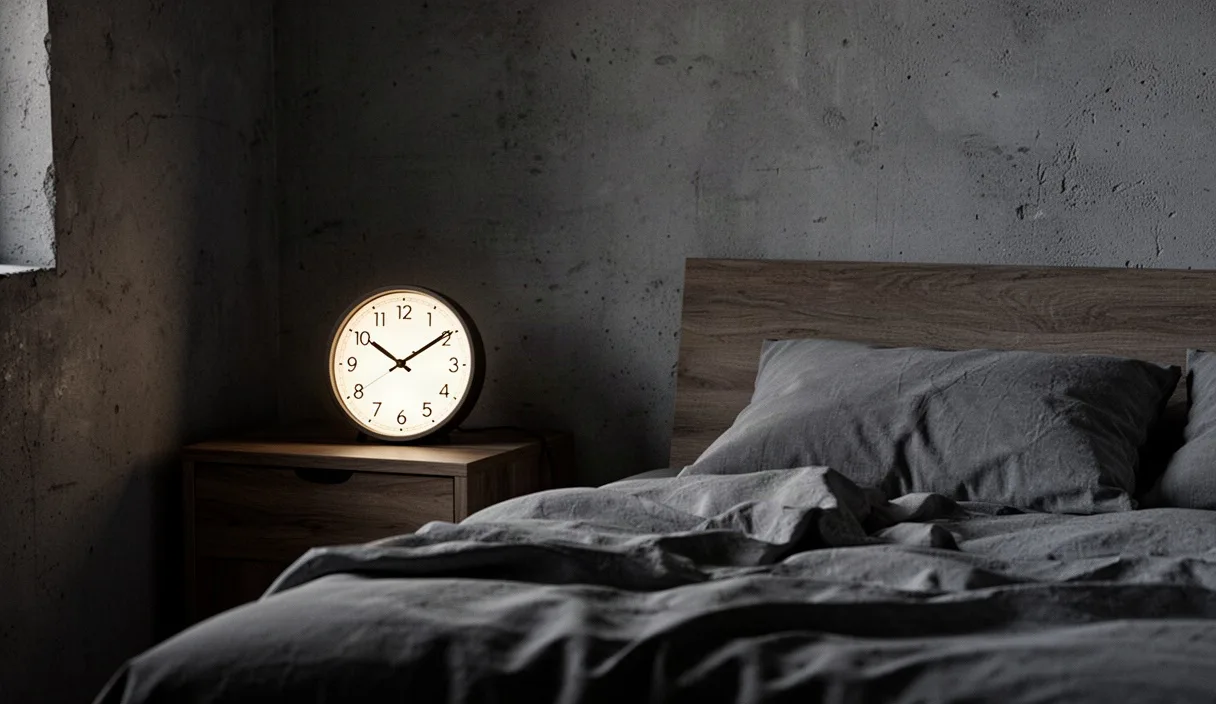

There is a particular indignity to waking at three in the morning, eyes open, mind already assembling a to-do list, while the rest of the household or street remains sensibly unconscious. It is common enough to have earned its own folk name in several cultures, and common enough that sleep clinics report it as one of the most frequent complaints they hear, usually phrased as "I fall asleep fine, I just can't stay asleep." The specificity of the hour is not coincidental, and understanding why the body tends to surface at this point in the night is a reasonable first step before assuming something is medically wrong.
This piece looks at the ordinary, largely non-alarming reasons this happens: the architecture of sleep itself, the bedroom environment, what and when you ate, and the way stress hormones behave differently in the second half of the night than the first. It also outlines a simple way to track the pattern for a week or two, and where the line sits between "adjust your routine" and "mention this to a doctor."
Why this particular wake-up time is so common
Sleep is not a single uniform state; it cycles through roughly ninety-minute blocks that shift in composition as the night progresses. In the first half of the night, those cycles are dominated by deep, slow-wave sleep, the kind that is genuinely hard to interrupt. By the third or fourth cycle, usually somewhere between four and six hours after falling asleep, the balance tips toward lighter stages and more REM sleep, which is physiologically closer to wakefulness. Someone who goes to bed at 11 p.m. will often hit this lighter stretch right around 3 a.m., which is why the complaint clusters so tightly around that hour rather than being evenly spread across the night.
There is also a hormonal piece. daily balance, the hormone most associated with alertness and stress response, follows a daily rhythm that begins rising several hours before a typical wake time, as the body prepares for the day ahead. For many adults that rise starts somewhere between 2 and 4 a.m., which means a brief daily balance pulse coincides almost exactly with the lighter sleep stage described above. Neither factor alone would necessarily wake a person, but the two arriving together often does.
Age plays a role as well. Sleep becomes more fragmented and lighter overall after roughly the mid-forties, meaning the same environmental disturbance that would have gone unnoticed at twenty-five, a car door, a partner shifting position, a slightly warm room, is more likely to fully wake someone later in life. This is worth knowing mainly because it reframes the question from "why is something wrong with me" to "why is this stage of sleep inherently easier to disrupt."
Temperature and bedroom environment factors
Core body temperature drops through the night, reaching its lowest point in the early hours before beginning to climb again ahead of natural waking. A bedroom that is too warm interferes with this drop and is one of the more commonly cited, and most fixable, causes of middle-of-the-night waking. Sleep researchers generally point to a range of about 60 to 67 degrees Fahrenheit (roughly 15 to 19 degrees Celsius) as comfortable for most adults, though this varies with bedding weight and what someone wears to bed.
Beyond temperature, a few environmental factors are worth checking directly:
- Light leakage: streetlights, standby LEDs on electronics, or early dawn light through thin curtains can be enough to nudge someone out of light sleep, even without fully waking them at a conscious level at first.
- Noise that is intermittent rather than constant: a refrigerator cycling on, a neighbor's plumbing, or a pet moving around tends to be more disruptive than steady background noise, because the brain habituates to constant sound but reacts to change.
- Mattress and joint pressure: a mattress past its useful life, generally seven to ten years depending on quality and use, can cause enough discomfort that a person shifts position and briefly surfaces, especially side sleepers whose hips and shoulders bear more pressure.
- Partner or pet movement: in shared beds, this is one of the more underreported causes, since the person waking often doesn't consciously register what disturbed them.
A practical way to test the temperature theory specifically is to try one deliberate change for three or four consecutive nights, lowering the thermostat by two or three degrees or switching to lighter bedding, rather than changing several variables at once. Isolating one factor at a time makes it much easier to tell what actually helped.
Meal timing and blood sugar patterns
Blood sugar dips overnight are a less obvious but fairly well-documented contributor to early waking, particularly for people who eat dinner early, skip an evening snack, or consume alcohol close to bedtime. Alcohol initially sedates but is metabolized within a few hours, and the resulting drop in blood glucose combined with the mild rebound alertness it produces is one of the more consistent reasons people who drink in the evening wake specifically in the middle of the night rather than sleeping through.
The mechanism works roughly like this: as glucose drops below a certain threshold, the body releases daily balance and adrenaline to raise it back up, and both of those hormones are activating rather than calming. Someone who has a large dinner at 6 p.m. and then nothing else until breakfast at 7 a.m. has gone thirteen hours without food, which for some people, especially those with lower body fat or higher metabolisms, is long enough for this to become an issue in the second half of the night.
A small, protein-and-fat-containing snack an hour or two before bed, such as a handful of nuts, plain yogurt, or a slice of cheese, is a commonly suggested adjustment, though it is worth being cautious with anything high in refined sugar close to bedtime, since that can produce the opposite effect: a quick spike followed by a sharper drop a few hours later. People managing metabolic balance or other blood sugar conditions should treat this as a topic for their own clinician rather than general adjustment, since medication timing complicates the picture considerably.
| Evening pattern | Possible overnight effect |
|---|---|
| Early dinner, no evening snack | Blood sugar drop several hours later, often around 3 to 4 a.m. |
| Alcohol within two hours of bed | Initial sedation, then rebound alertness as it metabolizes |
| Large, heavy meal close to bedtime | Digestive discomfort or reflux disrupting deeper sleep stages |
| High-sugar snack before bed | Quick glucose spike, sharper drop a few hours in |
Stress and light sleep in the second half of the night
Because the lighter, REM-heavy stages of sleep dominate the later part of the night, this is also when dreaming is most vivid and when a racing or anxious mind is most likely to pull someone fully into wakefulness rather than just stirring briefly. People going through a period of acute stress, work pressure, financial worry, an upcoming decision, often report that their 3 a.m. wakings coincide almost exactly with those stretches, and that the thoughts that surface feel disproportionately urgent compared with how they seem the next morning.
This is partly a feature of the lighter sleep stage itself: the prefrontal cortex, which handles rational perspective-taking, is less active during REM and the transitions around it, while the amygdala, involved in threat detection, remains relatively active. The practical result is that a mundane unresolved task can feel like an emergency at 3 a.m. in a way it simply doesn't at 3 p.m.
Once awake, the instinct to check the time or pick up a phone tends to make things worse, both because screen light can suppress melatonin production and because checking the time often triggers a bit of arithmetic anxiety about how much sleep remains, which is itself activating. A more commonly recommended approach is to keep the room dark, avoid the phone, and try a low-engagement activity like slow breathing or simply lying still with eyes closed rather than getting up immediately, reserving getting out of bed for cases where twenty minutes or more have passed without any drift back toward sleep.
Tracking the pattern before drawing conclusions
Before assuming a single cause, it helps to gather a small amount of data, since the reasons above often overlap and a week of casual observation can narrow things down considerably. A simple log kept on a phone or notepad for ten to fourteen nights, noting four or five details each morning, tends to be more useful than trying to remember patterns after the fact.
- What time you went to bed and roughly what time you woke during the night.
- What you ate and drank in the three hours before bed, including alcohol and caffeine.
- The approximate room temperature, or at least whether it felt warm, cool, or comfortable.
- Anything notably stressful or unresolved on your mind that day.
- How long it took to fall back asleep, and whether you got up or stayed in bed.
Patterns often become visible within a week: waking consistently four hours after a late glass of wine, for instance, or only on nights following a particularly tense workday. Some people find the cause is environmental and fixable within days; others find it is more tied to a temporary stressful period and resolves on its own once that passes. Either way, having the log makes any later conversation with a doctor considerably more useful than a vague description of "waking up most nights."
When to consider speaking with a clinician
Occasional middle-of-the-night waking is common and not, by itself, a sign of a disorder. It is worth raising with a doctor if the pattern is frequent, roughly more nights than not over several weeks, if it is accompanied by loud snoring, gasping, or witnessed pauses in breathing (which can point toward sleep apnea), or if waking is paired with symptoms like night sweats, a racing heart, or restless, uncomfortable legs that make lying still difficult.
It is also reasonable to bring it up if the waking is clearly tied to persistent anxiety or low mood that extends into the daytime, since restful sleep support and mental health conditions frequently reinforce each other and a clinician may want to address both together rather than treating the sleep disruption in isolation. This article does not attempt to diagnose any of these possibilities; it simply flags the kind of accompanying signs that shift the issue from a habit-and-environment question to one worth a professional evaluation.
A primary care doctor is usually the right first stop, and bringing the sleep log described above will make that conversation considerably more concrete than trying to describe the pattern from memory.
Common mistakes
A few habits tend to make early waking worse rather than better. Checking the phone or the clock immediately on waking is one, since both the light exposure and the mental math about remaining sleep time tend to increase alertness rather than reduce it. Changing several variables at once, new mattress, new supplement, cutting out caffeine entirely, all in the same week, is another, since it becomes impossible to tell which change mattered. Lying in bed frustrated for over an hour rather than briefly getting up in dim light to read something unstimulating can also train the brain to associate the bed with wakefulness rather than sleep. Finally, assuming a single bad night indicates a chronic problem often adds anxiety that makes the next night worse; a week or two of tracking is a more reliable basis for conclusions than any one night.
Practical next steps
Start with the cheapest, most reversible changes: adjust bedroom temperature down a few degrees, move dinner slightly later or add a small protein-based snack in the evening, and cut alcohol or move it earlier for a few nights to see if the timing of waking shifts. Run the sleep log alongside these changes for at least a week, since it is the comparison across nights, not any single adjustment, that reveals what is actually driving the pattern.
If the waking persists most nights for several weeks despite these adjustments, or if it comes with any of the warning signs mentioned above, snoring, breathing pauses, restless legs, or daytime anxiety that feels out of proportion, it is worth booking time with a doctor and bringing the log along. In most cases, though, this particular wake-up call turns out to be a fairly ordinary intersection of sleep architecture, room temperature, and whatever happened at dinner, rather than anything more serious.