 Nightlore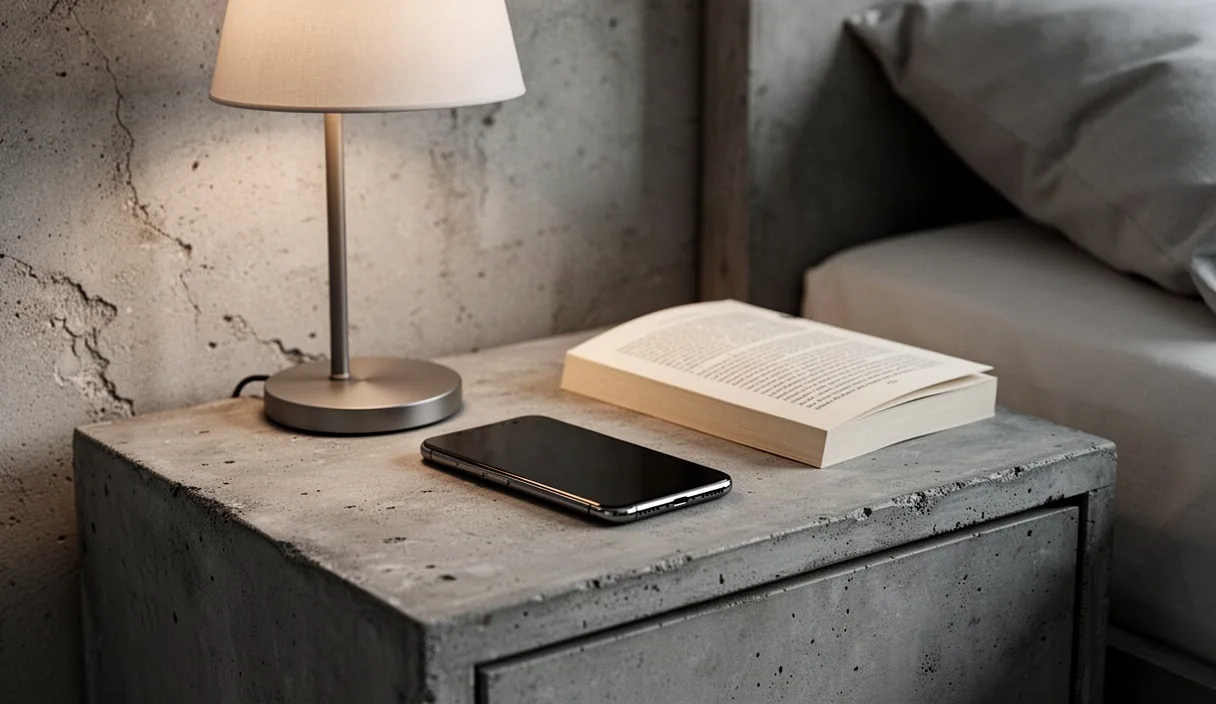

The advice to simply "put the phone down" an hour before bed has become so familiar that it has lost most of its usefulness. It is true, broadly, but it skips the part where a person actually has to fill that hour with something else, something that does not feel like a punishment or a void. This checklist is an attempt to fill that gap: a sequence of small, specific decisions that make the screen-free stretch before sleep workable rather than aspirational.
None of what follows requires new equipment or a dramatic overhaul of an evening. It requires noticing a few habits, adjusting a few defaults, and tracking results for long enough to see a pattern. The checklist at the end is meant to be used, not just read.
Why screens complicate falling asleep for many people
The mechanism most often cited is blue light suppressing melatonin production, and there is legitimate research behind that, though the effect size varies by device brightness, distance from the eyes, and duration of exposure. A phone held at arm's length for ten minutes is a different exposure than a laptop at close range for ninety. Framing the entire problem as a lighting issue, however, misses the more immediate one: screens are built to keep attention moving.
A short video ends and another begins automatically. A social feed refreshes with new content the instant it is opened. This is not incidental; it is the design goal of the products themselves. The result is that "checking for five minutes" reliably becomes twenty-five, and the mental state at the end of that stretch is more alert, not less, than at the start.
There is also a cognitive-load component that has nothing to do with light. Reading a work email, scrolling news, or replying to a message all activate problem-solving and social-processing circuits that are the opposite of what a body preparing for sleep needs. A person can turn the phone's brightness all the way down and still lie awake for forty minutes because their mind is still composing a reply to something they read at 11:40 p.m.
For most people, the fix is not one variable but three working together: less light late in the evening, a firmer stopping point, and a replacement activity that does not demand the same kind of attention. The rest of this checklist addresses each in turn.
Setting a realistic cutoff time
A cutoff that assumes perfect discipline will fail within a week. The more durable approach is to set the cutoff at a time that is genuinely achievable given an existing routine, then hold it consistently, rather than setting an ideal cutoff and abandoning it after two nights.
A reasonable starting point is thirty minutes before the target time for getting into bed, not thirty minutes before falling asleep, since those two moments are rarely the same. Someone aiming to be asleep by 11:00 p.m. and who typically takes fifteen to twenty minutes to fall asleep once in bed might set the cutoff at 10:15 p.m., giving room for the transition itself.
It helps to anchor the cutoff to an existing action rather than a clock time alone, since clock times are easy to negotiate with in the moment. "Phone goes on the kitchen counter after brushing teeth" is harder to argue with than "phone goes away at 10:15," because the former is tied to a physical habit already in place.
- Anchor to an action: tie the cutoff to brushing teeth, changing clothes, or turning off the kitchen light, not to a number on a clock.
- Build in a grace window: allow a five-minute check for anything urgent, then place the phone out of reach, rather than promising zero exceptions.
- Adjust weekly, not nightly: if the cutoff consistently fails for three or more nights in a week, move it fifteen minutes later rather than abandoning it.
Choosing a low-stimulation substitute activity
The gap left by a phone needs something in it, and vague intentions like "read a book" often collapse back into scrolling because the book was never chosen in advance. Deciding on the substitute activity earlier in the day, and having the materials for it physically ready, removes the moment of choice that usually goes to the phone by default.
Not all substitute activities are equally low-stimulation. A gripping thriller or a true-crime podcast can be just as arousing as a phone, even without a screen. The more reliable choices tend to be ones with low narrative tension and a slower pace: a short story collection, a familiar book being reread, folding laundry, light stretching, or writing three sentences about the day in a notebook.
| Activity type | Stimulation level | Notes |
|---|---|---|
| Fiction with high tension (thriller, cliffhanger chapters) | Moderate to high | Can delay sleep almost as much as a screen |
| Familiar or already-read book | Low | Predictability reduces the urge to keep reading "one more chapter" |
| Journaling or listing tomorrow's tasks | Low | Helps offload thoughts that otherwise surface once lying down |
| Light stretching or folding laundry | Low | Physical, repetitive, does not require sustained focus |
| Podcast or audiobook, spoken slowly | Low to moderate | Depends heavily on content; avoid anything plot-driven |
A practical habit is to keep two or three of these options visible in the room where the wind-down happens, so the decision at 10:15 p.m. is "which of these" rather than "what should I do now," a much smaller decision that is less likely to default back to the phone.
Adjusting lighting and room cues
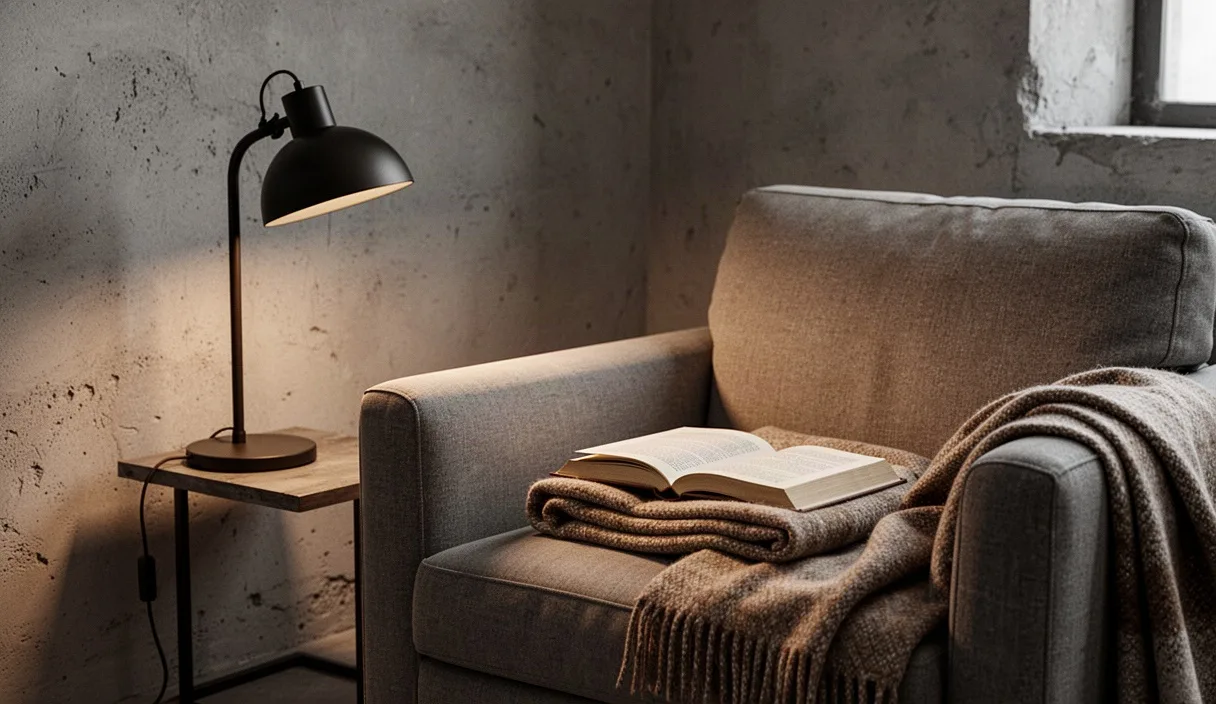
Overhead light at full brightness signals daytime activity to the body regardless of the actual hour, and switching it off entirely an hour before the cutoff, in favor of a single lamp or dimmed fixture, is a cheap and immediate change. Warm-toned bulbs, in the amber to orange range rather than white or blue-white, produce noticeably less of the alerting effect.
Temperature plays a supporting role that is often underestimated relative to light. Most sleep researchers point to a room in the range of 60 to 67 degrees Fahrenheit, roughly 16 to 19 degrees Celsius, as more conducive to falling asleep than a warmer room, though individual comfort varies and this is a general guideline rather than a fixed rule.
Visual clutter matters less than is sometimes claimed, but one specific cue is worth addressing directly: a charging phone left on a nightstand within arm's reach recreates the exact temptation the cutoff was meant to avoid. Moving the charger to another room, or at minimum to a dresser across the room rather than the nightstand, adds enough friction that picking it up requires standing up, which is often enough to break the impulse.
Handling the urge to check the phone one more time
The urge to check "just one more time" rarely comes from a specific need; it is closer to a reflex built from repetition, the same way reaching for a snack during a movie has little to do with hunger. Recognizing it as a reflex, rather than treating each instance as a fresh decision to weigh, makes it easier to let it pass without acting on it.
A short delay technique works reasonably well for many people: when the urge appears, wait five minutes and do something else, such as three slow breaths or a sentence in the notebook mentioned earlier, before deciding whether the check is still necessary. In practice, the urge frequently fades within that window, since it was never about the content on the phone so much as the habit of reaching for it.
For genuinely urgent situations, such as waiting on a message from a child or a work emergency, it is reasonable to make an explicit exception rather than pretending the rule has no flexibility. The distinction that matters is between a planned exception, decided in advance, and an unplanned one made in the moment, which is far more likely to expand into twenty minutes of scrolling.
A one-week checklist to track what works
A week is long enough to see whether a change is having any effect and short enough that a bad night does not feel like a failure of the whole approach. Recording just three or four data points each night, rather than a detailed sleep diary, keeps the tracking itself from becoming another screen-based task.
- Cutoff held? A simple yes or no for whether the phone was put away at the intended time.
- Substitute activity used: which one, chosen from the pre-decided shortlist.
- Estimated time to fall asleep: a rough figure is enough; precision is not the point.
- Any exception made, and why: a one-line note distinguishing planned exceptions from impulsive ones.
At the end of the week, the pattern is usually more informative than any single night. A person might notice that the cutoff held on weeknights but failed on both weekend evenings, or that a particular substitute activity, such as folding laundry, consistently preceded a faster time to sleep compared to reading. Those patterns are the actual output of the checklist; the nightly compliance is just the means of generating them.
Common mistakes
The most frequent mistake is treating the cutoff as an all-or-nothing rule and abandoning it entirely after the first missed night, rather than noting the miss and continuing the next evening. A second is choosing a substitute activity that is stimulating in a different way, such as a suspenseful audiobook, and concluding that "screen-free wind-down doesn't work" when the real issue was the choice of activity. A third is leaving the phone within reach as a matter of convenience, which undermines the cutoff before the evening even begins. A fourth is expecting a change in sleep latency after one or two nights; a week of inconsistent data is not enough to judge anything, and persistent difficulty falling asleep that lasts for several weeks is worth discussing with a doctor rather than managing indefinitely through routine adjustments alone.
Where to go from here
The most useful next step is choosing one cutoff time, one substitute activity, and one lighting change, and running them for the coming week using the tracking format above, rather than attempting all six sections of this checklist simultaneously. Small, verifiable changes tend to survive longer than comprehensive ones adopted all at once and abandoned by Thursday.
If, after two or three weeks of consistent effort, falling asleep still regularly takes longer than thirty minutes or is accompanied by racing thoughts that do not settle, that is a reasonable point to raise with a physician or a sleep specialist, since persistent restful sleep support can have causes that a bedtime routine alone will not address.